


On View
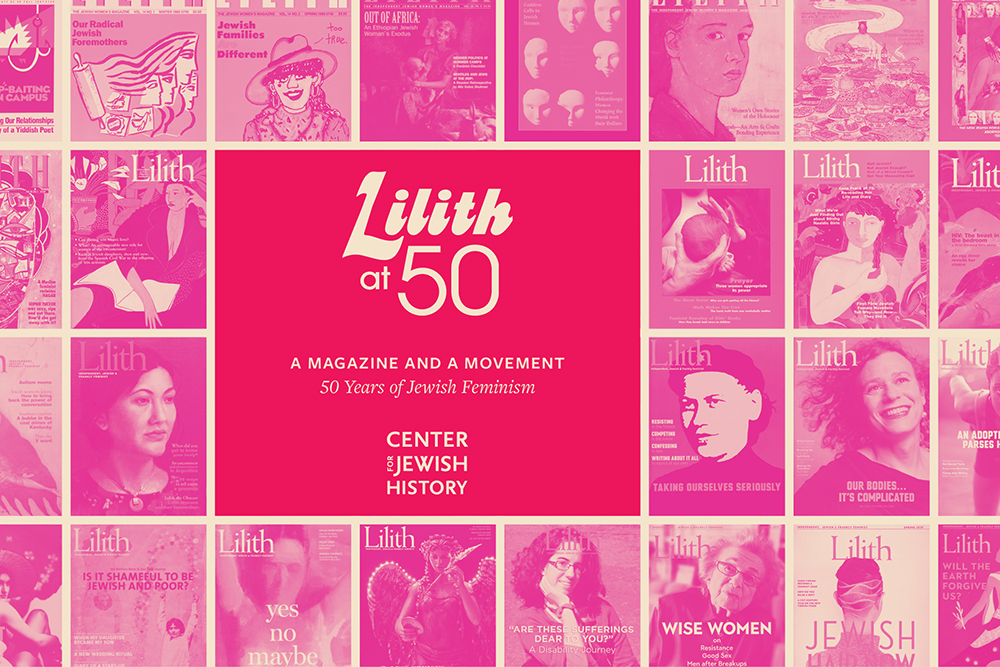
In 1972, a small group of Jewish women gathered around a dining room table with a plan to launch a Jewish feminist magazine. They called it Lilith.
When the first issue debuted in 1976, Lilith’s audience included Jewish feminists not yet connected to Judaism and observant Jewish women not yet connected to feminism. The magazine was determined to bring them all together. Early issues exposed Jewish institutions as veritable men’s clubs, unspooled gender stereotypes in pop culture, and introduced new rituals for women and girls to mark the Jewish calendar and personal milestones, all alongside original fiction, poetry, and art.
From the start, Lilith welcomed and amplified often-marginalized voices: queer people, people with disabilities, Jewish families living in poverty, incarcerated women, Mizrahi and Sephardi Jews, Jews of color, survivors of abuse, and more.
Fifty years later, Lilith continues to build on its role as a multimedia hub for ideas, community, and transformation. All Jewish feminists belong here. Lilith resists binaries and litmus tests and insists that telling the full truth about the experiences of women, girls, and gender-expansive people is a vital feminist act that both documents and drives change. As Lilith heads into its next half-century, it remains committed to bringing together voices, ideas, and perspectives that reflect the complexity of Jewish and feminist life today and for decades to come.
On dsplay through: December 31
Entry: Free
Mon-Wed: 9:30am-4:30pm
Thurs: 9:30am-8pm
Fri: 10am-3pm
Sat: Closed
Sun: 11am-5pm